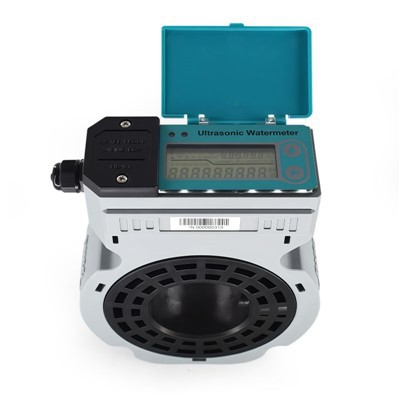
As a supplier of ultrasonic flow meters, I am often asked whether these devices can be used for measuring the flow of water. The answer is a resounding yes, and in this blog post, I will delve into the details of why ultrasonic flow meters are an excellent choice for water flow measurement. Ultrasonic Flow Meter
How Ultrasonic Flow Meters Work
Ultrasonic flow meters operate on the principle of measuring the time difference of ultrasonic waves traveling through a fluid. There are two main types: transit-time and Doppler.
Transit – Time Ultrasonic Flow Meters
In transit – time ultrasonic flow meters, two ultrasonic transducers are placed on opposite sides of a pipe. The transducers send ultrasonic signals in opposite directions – one with the flow and one against it. The time it takes for the ultrasonic wave to travel with the flow is shorter than the time it takes to travel against the flow. By measuring this time difference, the flow velocity of the fluid can be calculated. The formula for calculating the flow velocity (v) is based on the time difference (\Delta t) between the upstream and downstream travel times of the ultrasonic waves, the distance (L) between the transducers, and the angle (\theta) at which the ultrasonic waves are transmitted:
[v=\frac{L^{2}\Delta t}{2D\cos\theta\Delta t_{0}}]
where (D) is the pipe diameter and (\Delta t_{0}) is the average travel time of the ultrasonic wave in the fluid. Once the flow velocity is known, the volumetric flow rate (Q) can be calculated using the cross – sectional area (A) of the pipe ((Q = vA)).
Doppler Ultrasonic Flow Meters
Doppler ultrasonic flow meters work on the Doppler effect. They are suitable for fluids that contain particles or bubbles. A transducer emits an ultrasonic signal into the fluid. The signal is reflected off the particles or bubbles in the fluid, and the frequency of the reflected signal changes due to the movement of these particles. By measuring the frequency shift, the flow velocity of the fluid can be determined.
Advantages of Using Ultrasonic Flow Meters for Water Flow Measurement
Non – Invasive Installation
One of the most significant advantages of ultrasonic flow meters is their non – invasive installation. Unlike traditional flow meters that require cutting into the pipe, ultrasonic flow meters can be clamped onto the outside of the pipe. This makes installation quick, easy, and cost – effective. It also reduces the risk of leaks and disruptions to the water supply during installation. For example, in a large – scale water distribution system, non – invasive installation means that the system can continue to operate while the flow meters are being installed, minimizing downtime.
High Accuracy
Ultrasonic flow meters can provide high – accuracy measurements of water flow. Transit – time ultrasonic flow meters, in particular, can achieve accuracies of up to ±0.5% under ideal conditions. This high level of accuracy is crucial for applications such as water billing, where precise measurements are required to ensure fair and accurate charging for water usage.
Wide Range of Pipe Sizes
Ultrasonic flow meters can be used for a wide range of pipe sizes, from small – diameter pipes in residential plumbing to large – diameter pipes in industrial water systems. This versatility makes them suitable for a variety of applications, whether it’s measuring the water flow in a household faucet or in a large – scale water treatment plant.
Low Maintenance
Since ultrasonic flow meters have no moving parts in contact with the fluid, they require minimal maintenance. There is no wear and tear on components, and there is no need for regular calibration. This reduces the overall cost of ownership and ensures reliable long – term operation.
Applications of Ultrasonic Flow Meters in Water Measurement
Water Distribution Systems
In water distribution systems, ultrasonic flow meters are used to monitor the flow of water from treatment plants to consumers. They help utility companies manage the distribution network, detect leaks, and ensure that the right amount of water is being supplied to different areas. For example, by measuring the flow at different points in the network, operators can identify areas where there may be excessive water loss due to leaks.
Industrial Water Usage
Many industries rely on water for various processes, such as cooling, manufacturing, and cleaning. Ultrasonic flow meters are used to measure the water flow in these industrial applications. They help industries optimize their water usage, reduce waste, and ensure that the water is being used efficiently. For instance, in a power plant, ultrasonic flow meters can be used to measure the flow of cooling water, ensuring that the cooling system is operating at optimal efficiency.
Water Treatment Plants
In water treatment plants, ultrasonic flow meters are used to measure the flow of water at different stages of the treatment process. This helps operators control the dosage of chemicals, monitor the efficiency of the treatment process, and ensure that the treated water meets the required quality standards.
Considerations When Using Ultrasonic Flow Meters for Water Measurement
Fluid Properties
The accuracy of ultrasonic flow meters can be affected by the properties of the water. For example, the presence of air bubbles, suspended solids, or changes in water temperature can affect the transmission of ultrasonic waves and thus the accuracy of the measurements. In cases where the water contains a high concentration of air bubbles or solids, a Doppler ultrasonic flow meter may be more suitable.
Pipe Conditions
The condition of the pipe can also affect the performance of ultrasonic flow meters. Rough inner surfaces, pipe bends, and changes in pipe diameter can cause reflections and scattering of ultrasonic waves, leading to inaccurate measurements. It is important to ensure that the pipe section where the flow meter is installed is straight and has a smooth inner surface.
Installation Location
Proper installation location is crucial for accurate measurements. The flow meter should be installed at a location where the flow is fully developed and free from disturbances. This typically requires a straight pipe section of at least 10 – 15 pipe diameters upstream and 5 – 10 pipe diameters downstream of the flow meter.
Conclusion
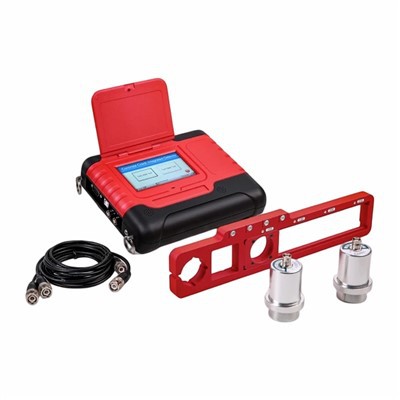
In conclusion, ultrasonic flow meters are an excellent choice for measuring the flow of water. Their non – invasive installation, high accuracy, wide range of pipe sizes, and low maintenance make them suitable for a variety of water – related applications, from residential to industrial. However, it is important to consider the fluid properties, pipe conditions, and installation location to ensure accurate and reliable measurements.
Flow Meter If you are in need of a reliable solution for measuring water flow, our ultrasonic flow meters offer a high – quality option. We have a wide range of products to meet different requirements and applications. Whether you are a water utility company, an industrial facility, or a water treatment plant, we can provide you with the right flow meter for your needs. Contact us to discuss your specific requirements and explore how our ultrasonic flow meters can benefit your operations.
References
- Beck, M. S., & Plaskowski, A. (1987). Flow Measurement Handbook: Industrial Designs, Operating Principles, Performance, and Applications. John Wiley & Sons.
- Spitzer, D. W. (2001). Flow Measurement: Practical Guides for Measurement and Control. ISA – The Instrumentation, Systems, and Automation Society.
Dalian Yheng Technology Co., Ltd.
Dalian Yheng Technology Co., Ltd. is one of the leading ultrasonic flow meter manufacturers and suppliers in China, also supports customized service. We warmly welcome you to buy high quality ultrasonic flow meter in stock here from our factory. Contact us for more details.
Address: F1605, NO.10 Huoju road, High-tech Industrial Zone, Dalian, China
E-mail: admin@dlyheng.com
WebSite: https://www.yhengphmeter.com/
