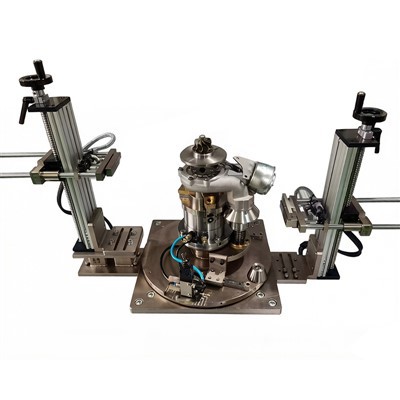
In the dynamic landscape of the hydraulic industry, understanding the communication interfaces of production equipment is crucial for efficient operation, integration, and overall productivity. As a supplier in the hydraulic industry production equipment sector, I’ve witnessed firsthand the transformative power of these interfaces in modern manufacturing. This blog post aims to explore the various communication interfaces commonly used in hydraulic industry production equipment, their advantages, and how they contribute to the seamless functioning of industrial processes. Hydraulic Industry Production Equipment
1. CANopen Interface
CANopen, based on the Controller Area Network (CAN) protocol, is one of the most widely used communication interfaces in the hydraulic industry. It provides a standardized way to communicate between different devices, such as hydraulic pumps, valves, and sensors. CANopen offers several benefits that make it a popular choice for hydraulic equipment:
- Flexibility and Scalability: CANopen allows for easy integration of new devices into an existing network. It supports a wide range of device types, from simple sensors to complex actuators, making it suitable for both small and large-scale hydraulic systems. For example, in a hydraulic press system, CANopen can be used to connect multiple sensors for pressure, temperature, and position monitoring, as well as control valves to adjust the press force and speed.
- High Data Transfer Rate: With a data transfer rate of up to 1 Mbps, CANopen can quickly transmit data between devices. This is essential for real-time control applications in hydraulic systems, where timely information is crucial for maintaining optimal performance. For instance, in a hydraulic excavator, CANopen enables the rapid exchange of data between the engine control unit, hydraulic pumps, and the operator’s control panel, ensuring smooth and responsive operation.
- Fault Tolerance: CANopen has built-in error detection and correction mechanisms, which enhance the reliability of the communication network. In case of a communication error, the protocol can automatically retransmit the data, minimizing the impact on the system’s operation. This is particularly important in harsh industrial environments where electromagnetic interference and other factors can disrupt communication.
2. Profibus Interface
Profibus is another well-established communication interface in the hydraulic industry. It is a fieldbus system that enables fast and reliable communication between different automation devices. Profibus is available in two main variants: Profibus DP (Decentralized Peripherals) and Profibus PA (Process Automation).
- Profibus DP: This variant is designed for high-speed communication between controllers and decentralized I/O devices. In hydraulic production equipment, Profibus DP is commonly used to connect programmable logic controllers (PLCs) with hydraulic valves, pumps, and other actuators. It offers a high data transfer rate of up to 12 Mbps, allowing for quick and efficient control of hydraulic systems. For example, in a hydraulic injection molding machine, Profibus DP can be used to transfer control commands from the PLC to the hydraulic valves, ensuring precise and accurate operation of the molding process.
- Profibus PA: Profibus PA is optimized for process automation applications, such as monitoring and control of hydraulic fluid parameters. It uses a different physical layer than Profibus DP, which allows for intrinsically safe communication in hazardous environments. In a hydraulic power plant, Profibus PA can be used to connect sensors for measuring pressure, flow, and temperature of the hydraulic fluid, providing real-time data for process monitoring and control.
3. Ethernet/IP Interface
Ethernet/IP is an industrial Ethernet network protocol that has gained significant popularity in the hydraulic industry in recent years. It combines the benefits of Ethernet technology with the Common Industrial Protocol (CIP), providing a high-speed and reliable communication interface for industrial automation.
- High-Speed Communication: Ethernet/IP offers a data transfer rate of up to 1 Gbps, which is much higher than traditional fieldbus systems. This makes it suitable for applications that require large amounts of data to be transferred quickly, such as high-resolution sensor data and video monitoring. In a hydraulic testing facility, Ethernet/IP can be used to transfer data from multiple sensors to a central control system, enabling real-time analysis and reporting.
- Easy Integration with IT Systems: Ethernet/IP is compatible with standard Ethernet network infrastructure, making it easy to integrate with existing IT systems. This allows for seamless communication between hydraulic production equipment and enterprise-level systems, such as manufacturing execution systems (MES) and enterprise resource planning (ERP) systems. For example, in a hydraulic manufacturing plant, Ethernet/IP can be used to transfer production data from the shop floor to the MES system, enabling better production planning and management.
- Open Standard: Ethernet/IP is an open standard, which means that it is not proprietary to any particular vendor. This allows for greater flexibility in choosing equipment and components, as well as easier interoperability between different devices. In a hydraulic system, different manufacturers’ devices can be easily integrated using Ethernet/IP, reducing the complexity and cost of system integration.
4. Modbus Interface
Modbus is a simple and widely used communication protocol in the industrial automation field, including the hydraulic industry. It is a master-slave protocol that allows a master device (such as a PLC or a computer) to communicate with multiple slave devices (such as hydraulic sensors and actuators).
- Simplicity and Compatibility: Modbus is a relatively simple protocol that is easy to implement and understand. It is compatible with a wide range of communication media, including serial communication (RS-232, RS-485) and Ethernet. This makes it suitable for both small and large-scale hydraulic systems, as well as for retrofitting existing equipment. For example, in a small hydraulic workshop, Modbus can be used to connect a PLC with a few hydraulic sensors and valves using a serial communication link.
- Low Cost: Modbus is an open protocol, which means that there are no licensing fees associated with its use. This makes it a cost-effective solution for hydraulic industry production equipment, especially for small and medium-sized enterprises. Additionally, the simplicity of the protocol reduces the complexity and cost of system development and maintenance.
- Wide Availability of Devices: There are many Modbus-compatible devices available on the market, including sensors, actuators, and controllers. This makes it easy to find the right components for a hydraulic system, as well as to replace or upgrade existing devices.
5. Wireless Communication Interfaces
In addition to the traditional wired communication interfaces, wireless communication technologies are also being increasingly used in the hydraulic industry. Wireless communication offers several advantages, such as flexibility, mobility, and reduced installation costs.
- Wi-Fi: Wi-Fi is a widely used wireless communication technology that provides high-speed data transfer over short to medium distances. In a hydraulic production facility, Wi-Fi can be used to connect mobile devices, such as tablets and smartphones, to the hydraulic equipment for remote monitoring and control. For example, an operator can use a Wi-Fi-enabled tablet to access real-time data from a hydraulic system and make adjustments as needed.
- Bluetooth: Bluetooth is a short-range wireless communication technology that is commonly used for connecting devices such as sensors and actuators. In a hydraulic system, Bluetooth can be used to connect a small sensor to a mobile device for data collection and analysis. For example, a Bluetooth-enabled pressure sensor can be used to monitor the pressure of a hydraulic cylinder, and the data can be transmitted to a smartphone for real-time display.
- ZigBee: ZigBee is a low-power wireless communication protocol that is designed for applications that require long battery life and low data transfer rates. In a hydraulic monitoring system, ZigBee can be used to connect multiple sensors to a central gateway, allowing for remote monitoring of hydraulic parameters such as pressure, temperature, and flow.
Conclusion
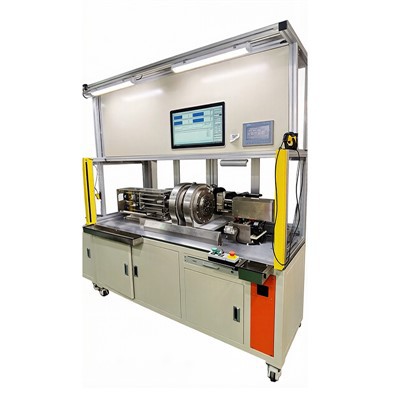
The communication interfaces of hydraulic industry production equipment play a vital role in ensuring the efficient and reliable operation of industrial processes. Each interface has its own advantages and is suitable for different applications and requirements. As a supplier in the hydraulic industry, we understand the importance of providing high-quality equipment with the right communication interfaces. We offer a wide range of hydraulic production equipment that is compatible with various communication interfaces, allowing our customers to choose the most suitable solution for their needs.
Automotive Industry Production Equipment If you are in the market for hydraulic industry production equipment and are interested in learning more about our products and the communication interfaces they support, we invite you to contact us for a detailed discussion. Our team of experts is ready to assist you in finding the right solution for your specific requirements.
References
- CAN in Automation (CiA) – CANopen Specification
- PROFIBUS & PROFINET International (PI) – Profibus Technical Documentation
- ODVA – Ethernet/IP Specification
- Modbus Organization – Modbus Protocol Specification
- IEEE – Wi-Fi Standards
- Bluetooth SIG – Bluetooth Core Specification
- ZigBee Alliance – ZigBee Specification
Shanghai Zenyan Automation Engineering Co., Ltd.
As one of the leading hydraulic industry production equipment manufacturers in China, we warmly welcome you to buy advanced hydraulic industry production equipment made in China here from our factory. All customized machines are with high quality and low price. Contact us for quotation.
Address: 3rd Floor, Building A, No.5629 Beisong Road, Chedun Town, Songjiang District, Shanghai, China
E-mail: zenyan_sh@163.com
WebSite: https://www.zenyanauto.com/
